

Tate + Co recently attended the annual Independent Schools’ Bursars Association Conference and was delighted to be featured in the official 2026 magazine. Jerry Tate, founder and director here at Tate + Co, and Nick Pocock, architect and leader of the practice’s education work, are authors of the article ‘How to make sure your capital projects have the maximum positive outcomes’. Jerry is also a school governor and so has a valuable perspective on how schools can ensure capital projects deliver the widest possible benefits.



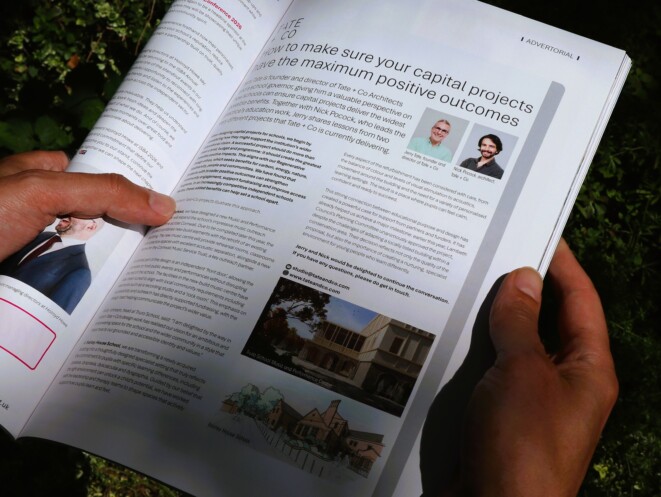
When designing capital projects for schools, the Tate + Co Team begins by considering how the building might ultimately support the institution’s wider educational vision. A successful project should do more than meet the brief, budget and programme; it should create the greatest possible positive impacts. This notion aligns with our own Regenerative Design ethos, which seeks benefits for carbon, energy, nature, biodiversity and people and communities. We have also found that projects with broader positive outcomes can strengthen community engagement, support fundraising and improve access to grants. In an increasingly competitive independent schools sector, these added benefits can help set a school apart.
Two current Tate + Co projects illustrate this approach.

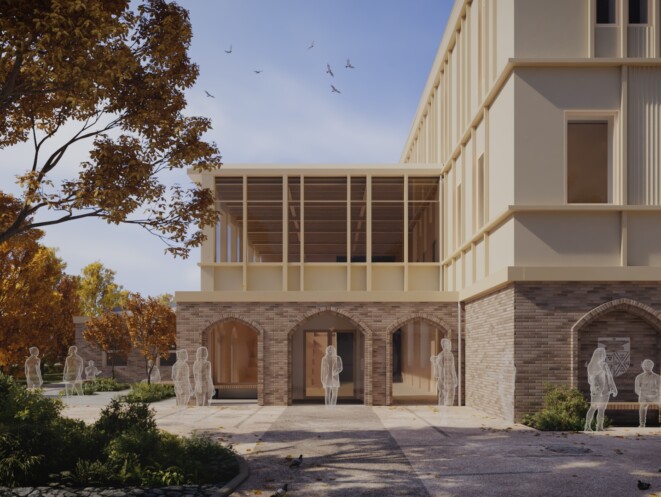

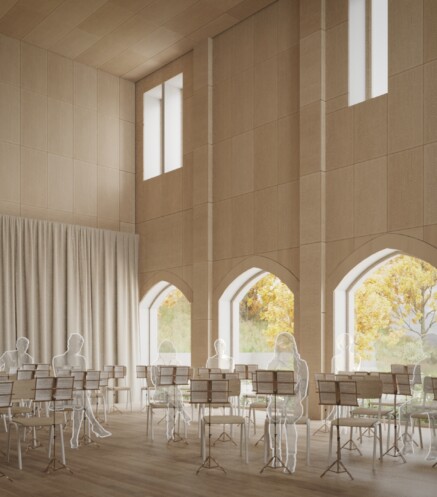
Images above: Truro School Music and Performance Centre
At Truro School, we have designed a new Music and Performance Centre that will expand the school’s impressive music outreach programme across Cornwall. Due to be completed late 2026, the project combines new-build elements with the retrofit of an existing building. The new Music Centre will provide rehearsal rooms, classrooms and practice spaces with excellent acoustic separation, alongside a new home for the Cornwall Music Service Trust, a key outreach partner.
A central part of the design is a clear and independent “front door”, allowing the complex to host public events and performances without disrupting the rest of the school. The facilities in the new-build Music Centre have also been carefully tuned to align with local community requirements including elements like a recording studio and a specialist ‘rock room’. This emphasis on accessibility and outreach has directly supported fundraising, with the design itself helping communicate the project’s wider value.

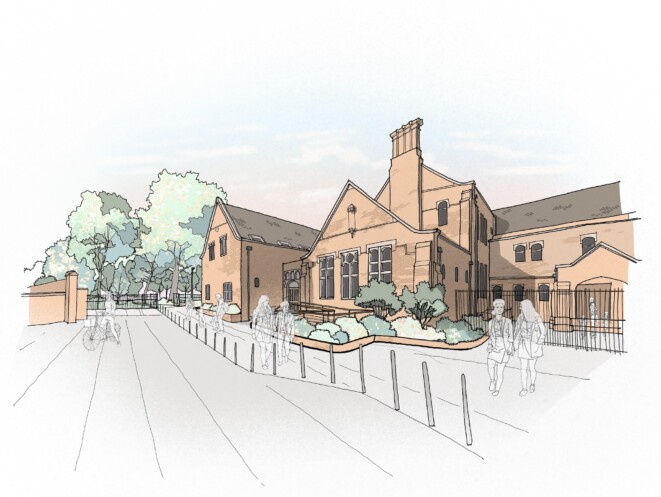

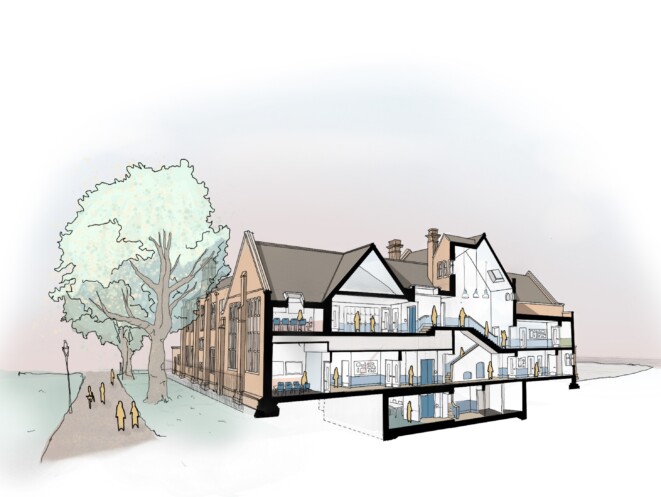
Images above: Fairley House School
At Fairley House School, we are transforming a newly acquired building into a thoughtfully designed specialist setting that truly reflects the commitment to pupils with Specific Learning Differences (SpLD), including dyslexia, dyspraxia, dyscalculia and dysgraphia. Guided by our belief that the right environment can unlock a child’s potential, we have worked hand‑in‑hand with the leadership and therapy teams to shape spaces that actively support how the pupils learn and feel.
Every aspect of the refurbishment has been considered with care from the balance of colour and levels of visual stimulation, to acoustics, movement around the building, and the need for a variety of personalised learning settings. The result is a place where pupils can feel calm, confident and ready to succeed; a building that supports both structured, specialist teaching and the wellbeing of every child.
This strong connection between educational purpose and design has created a powerful case for support from partners and funders who share our vision. It has already helped us achieve a major milestone: earlier this year, Lambeth Council’s Planning Committee unanimously approved the project, despite the challenges of adapting a locally listed building within a conservation area. Their decision reflects not only the quality of the proposal, but also the importance of creating a nurturing, specialist environment for young people who learn differently.




In summary, when planning a capital project, schools should consider not only what they need the building to do, but also how it can create wider positive outcomes. Those broader benefits can be crucial in helping bring a project to life.
Jerry and Nick would be delighted to continue the conversation so if you have any questions, please do get in touch.

Nick Pocock
Architect

With experience spanning a range of sectors and services including Residential, Education and Masterplanning, Nick is committed to delivering sustainable projects which express and amplify a deep-rooted connection to their community and environment. Nick’s creative designs are underpinned by a hands-on approach to navigating the technical complexities and regenerative potential of every project.
Recently appointed Design Lead – Education, Nick is responsible for the strategic and creative direction of this key sector within Tate + Co. He is currently leading the design and delivery of the Truro School Music and Performance Centre which is on site due to open in spring 2026. He is also working on a number of highly significant projects with the Birkbeck University of London.
Nick has experience of working with listed buildings, within green belt and conservation areas, winning an RIBA Regional Award and NLA ‘Don’t Move Improve’ prize in the process.