Location: London UK
Client: The Royal Parks
Project Team: HTA Design LLP, Dr Noel Kingsbury (horticulturalist), SLR Consulting, Price & Myers, Ian Thackray, Millimetre, Cake Industries, Fallen and Felled, Blakedown, Bradleys Architectural Metal Finishes
Timescale: Completeted - April 2026
Size: 0.8 Ha

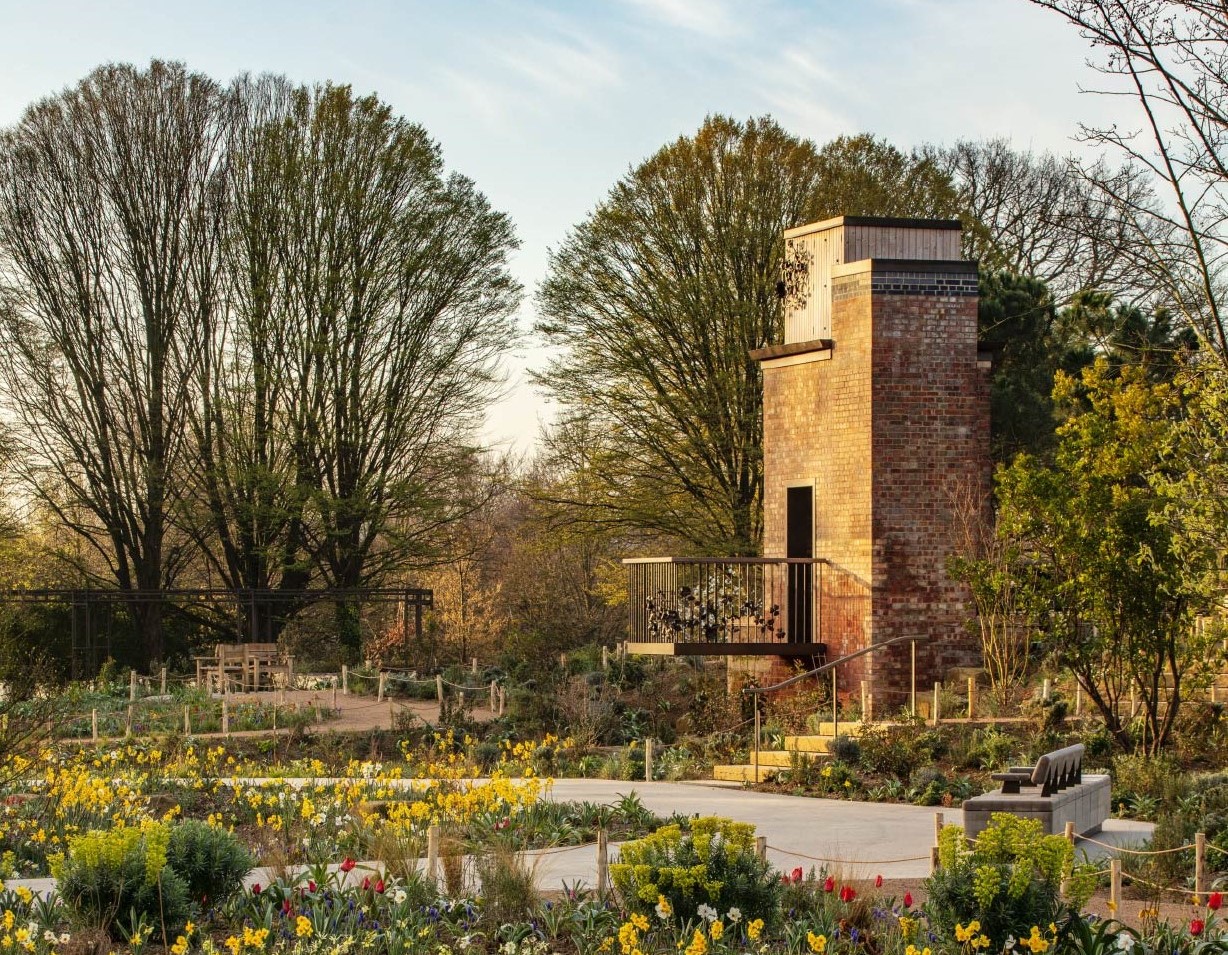
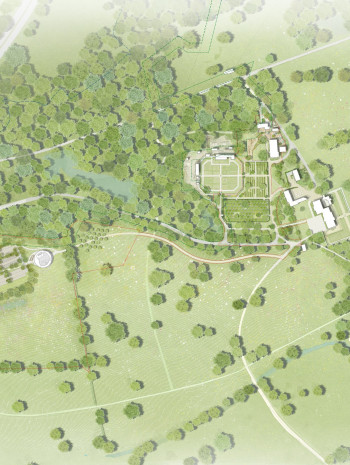
The Queen Elizabeth II Garden at The Regent’s Park honours Her Late Majesty’s life and legacy and now complete, has turned a redundant area of this famous park into a biodiverse space that will communicate an important message about natural resilience in our changing climate.
The site once grew shrubs and plants for London’s eight Royal Parks but following the opening of the Hyde Park Nursery in 2018, it was decommissioned. The new garden demonstrates how brownfield sites can be transformed using materials mainly available nearby into verdant spaces, returning this currently disused section of Regent’s Park to the public domain.

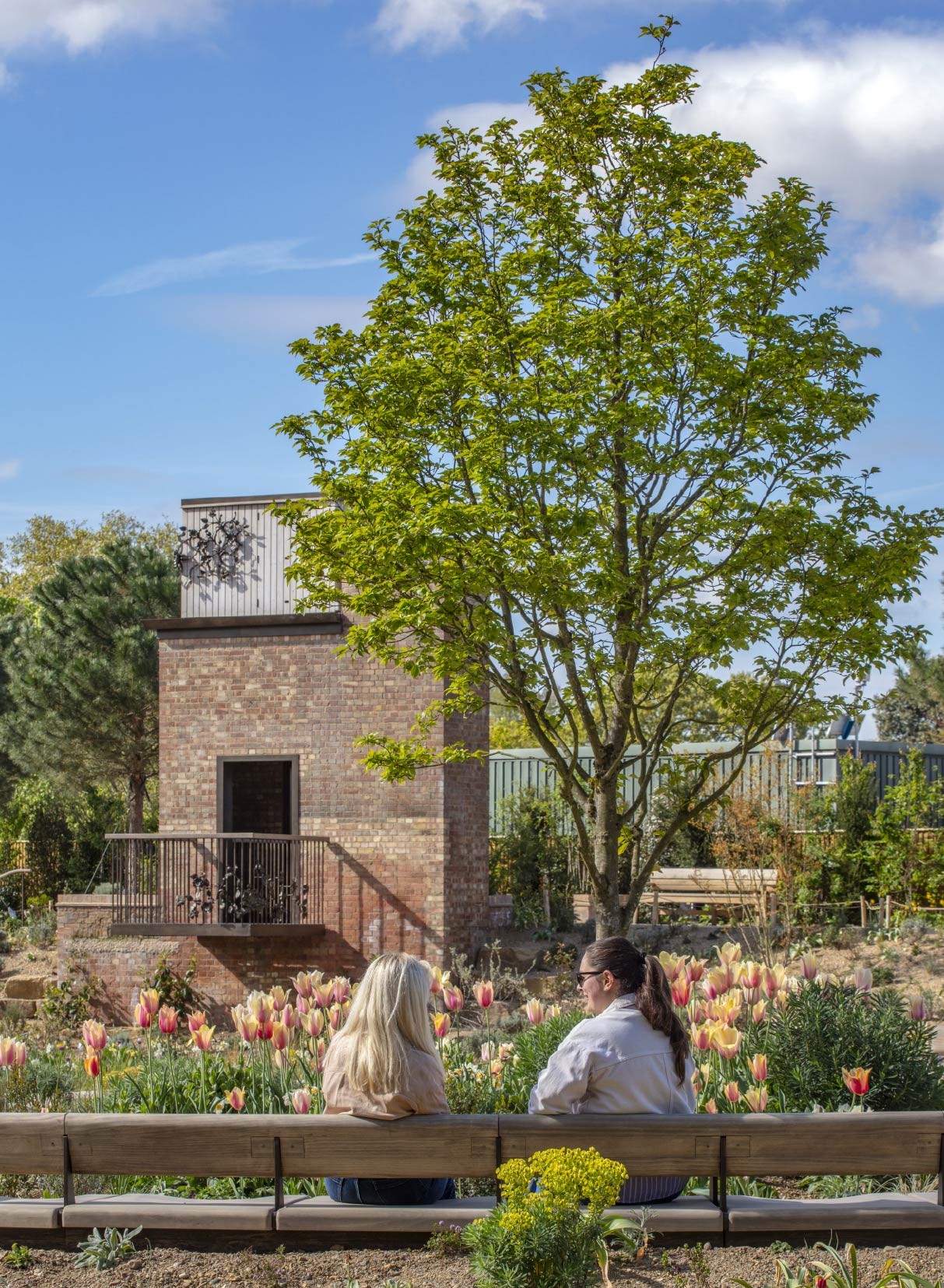

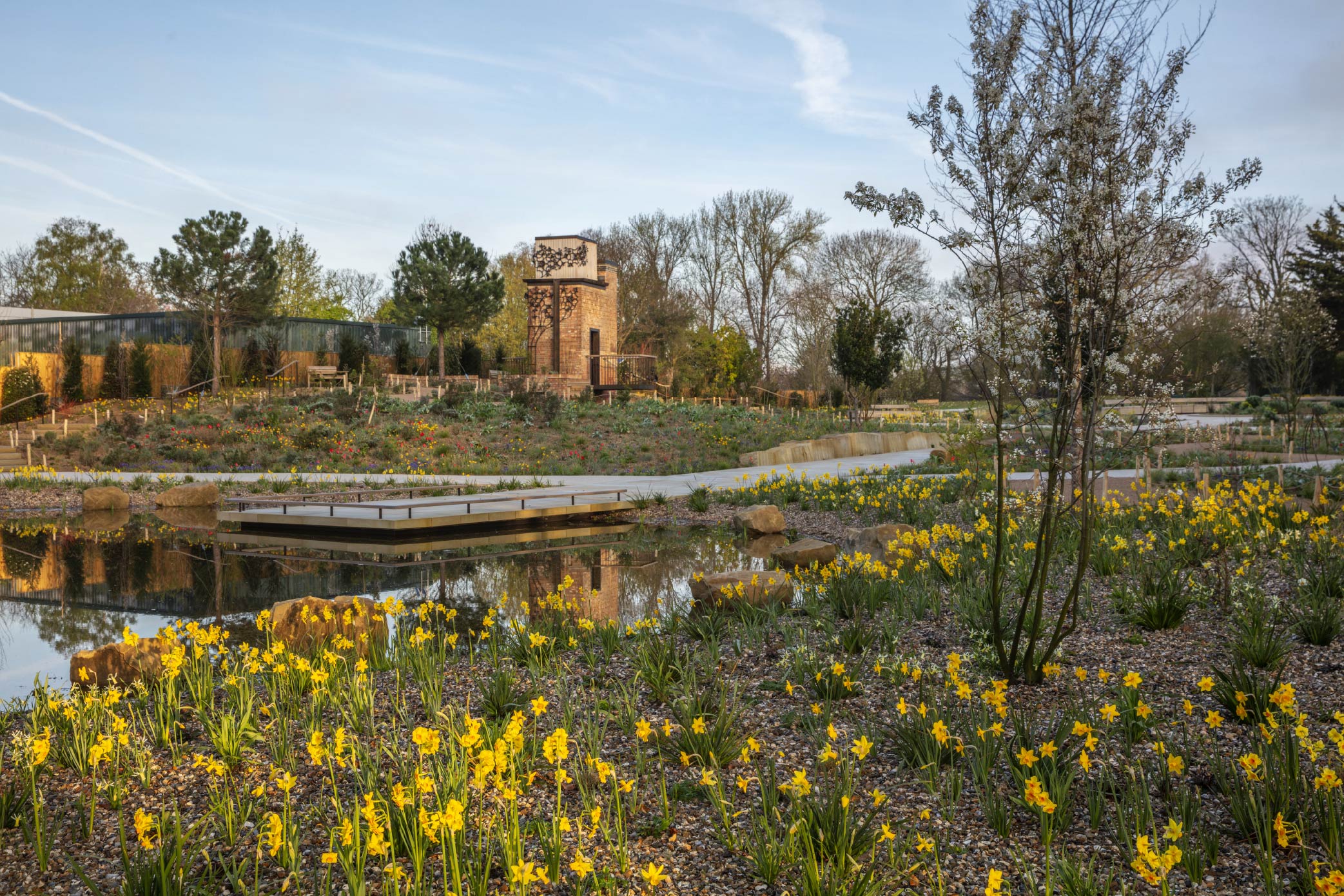
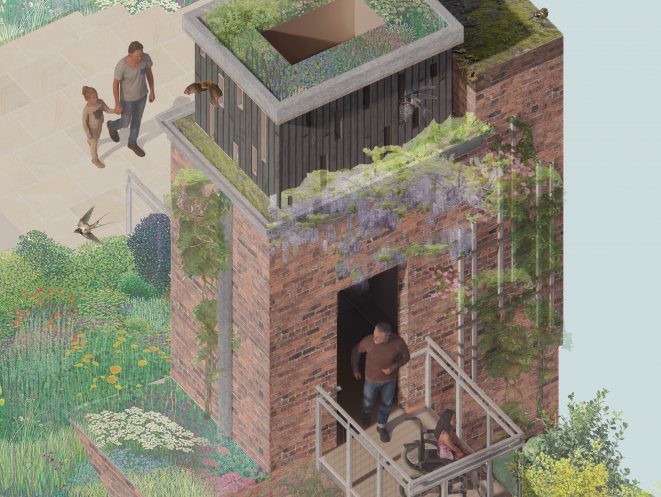
The team at HTA approached Tate + Co to reimagine a former water tower. Located at the very heart of the garden, the brief was to retain the original structure and create a focal point, complete with a viewing platform and wildlife habitat.
Regenerative design was key to the overall approach, with the tower sympathetically adapted to provide a safe and encouraging environment for birds and bats. By rebuilding the structure’s existing water storage housing, Tate + Co introduced roosting and nesting boxes for bats, swifts and swallows, while climbing plants provide food, shelter and breeding sites.
The tower features decorative ironwork with symbols of roses, thistles, shamrocks and leeks, the native plants of the four home nations embroidered on Queen Elizabeth II’s coronation gown. Steel from planting beds, previously housed in the greenhouses, was also used to provide flooring and reinforcement to the viewing platform.
Working with blacksmith Ian Thackray encouraged the Tate + Co team to craft a larger and more intricate design than they had initially thought possible, starting as obvious metalwork before turning into an organic pattern. Flowing over the brickwork and balustrade, this offers a real moment of surprise as you walk through the garden.

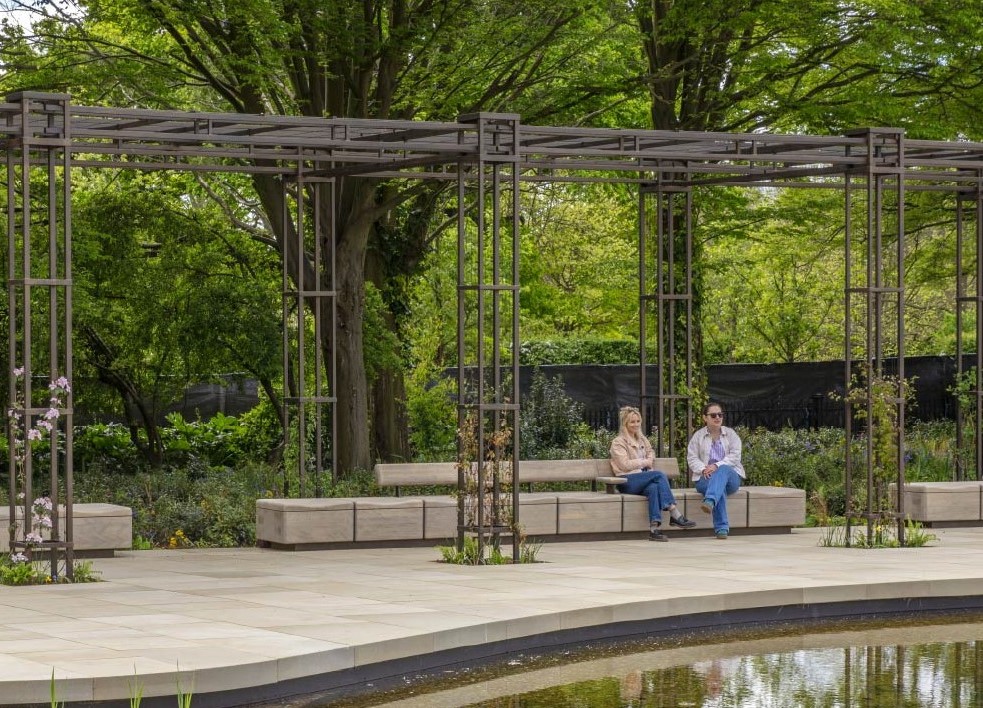

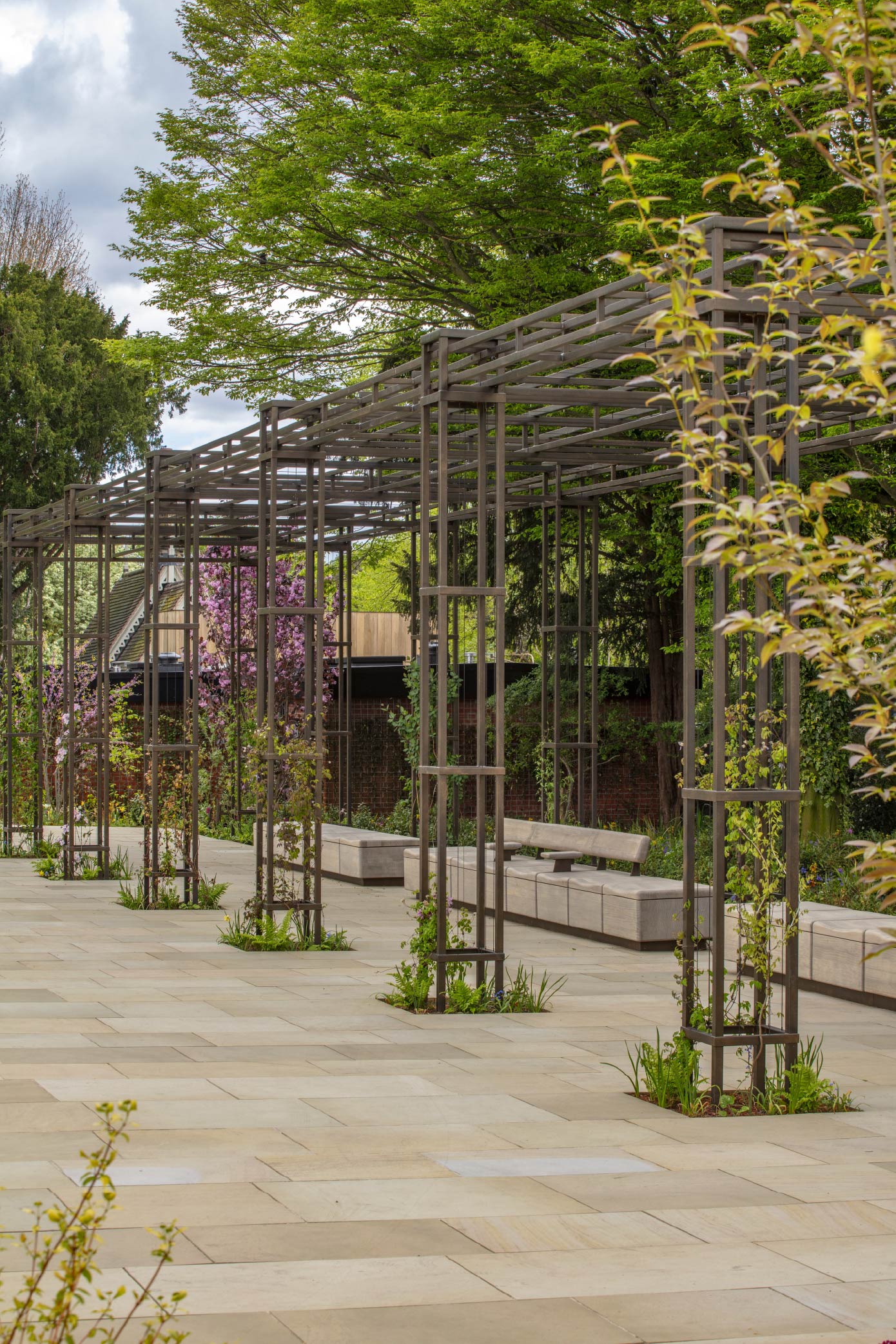
Tate + Co also designed and delivered the pergola. Incorporating salvaged steel, the structure embodies the garden’s circular economy principles while serving as a framing device for the space, creating a peaceful place for contemplation and relaxation.
Working in collaboration with horticulturists, the pergola has been created to support plants and greenery, including Wisteria and Rosa, to grow up and over the structure, providing shade for visitors. This thoughtful design means that its appearance will continue to evolve over time, serving as a supporting act for nature to inhabit.

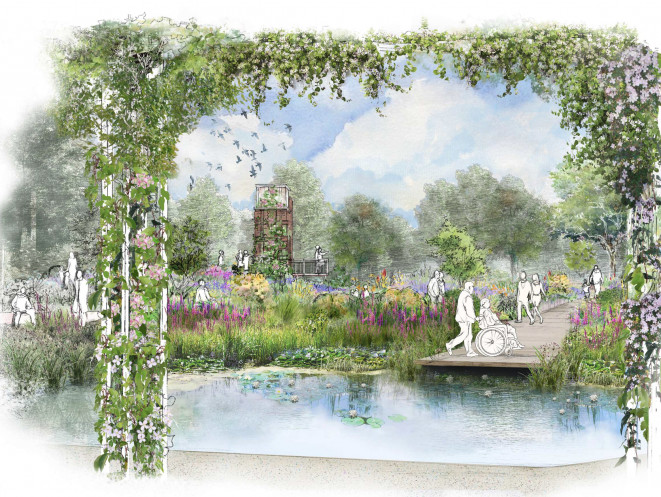

Led by the landscape architects HTA Design, we worked with an expert team to ensure we balanced the diverse views of all stakeholders, from horticultural to heritage, and create a scheme that would truly reflect the needs of the wider Regent’s Park community.

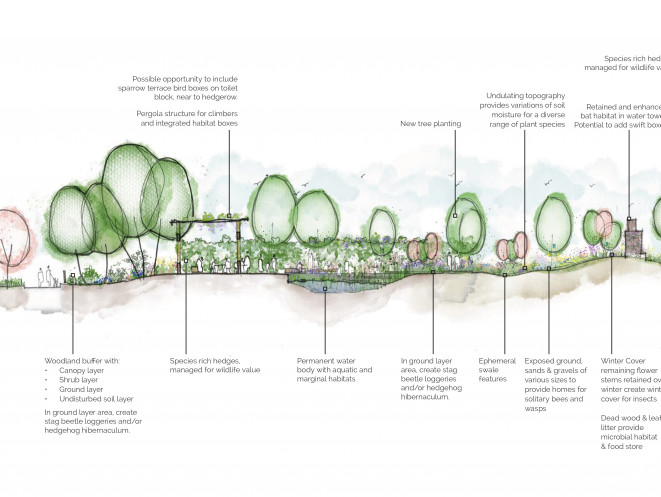

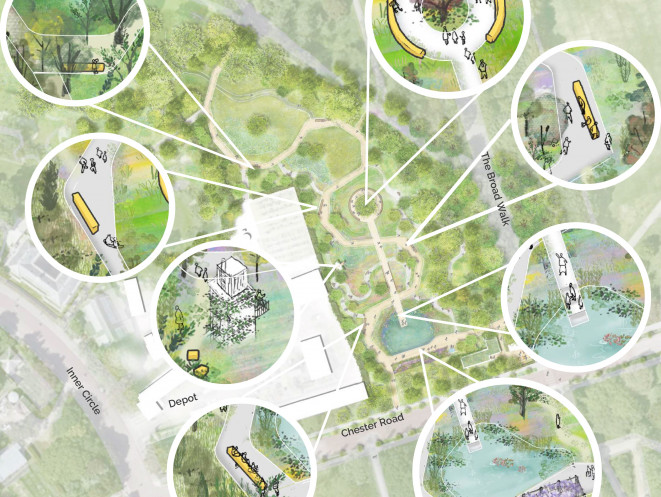
Demonstrating our regenerative approach to architecture and design, The Queen Elizabeth II Garden promotes a circular economy, minimising waste, pollution and environmental impact. Demolition of the former plant nursery created a substantial amount of ‘waste’ material, including crushed concrete, brick and steelwork, which has been re-used in the new garden.